Need tree removal in Media?
Tell us about your tree and where it stands. We will point you to independent providers in our network who can give a written quote.
No obligation
Request a written estimate today
Taking down a tree sounds simple until you look at what is around it. Roofs, fences, wires, and neighbors all change how the job gets done. Capriesemurray Tree Service explains those details in plain words so a quote makes sense when you see it.
This page covers the signs a tree is a danger, how providers take trees down, and what pushes the price up or down across the Media area. Capriesemurray Tree Service is a referral service. We connect you with independent local providers in our network. The provider inspects the tree, explains the plan, and puts a written quote on paper. You decide what happens next. There is no obligation to hire anyone.
If a tree is leaning toward your house, split down the trunk, or touching a power line, keep people and cars away from it. Picture a glass sitting on the edge of a table. It may stay put for a while, but you would not stand under it to find out. Contact the utility about any wires, then ask a local provider to look at the tree.
It means cutting a tree down safely and carrying the pieces away. Think of taking apart a tall bookcase inside a small room. You cannot just tip it over. You remove it in a careful order so nothing hits the walls. Many trees near homes get the same treatment.
The method depends on the space around the tree. A provider will read the tree before choosing one.
A tree falling service suits open ground. The provider cuts a notch, makes a back cut, and lets the tree fall in a planned direction. This is quick, but it needs a clear landing zone.
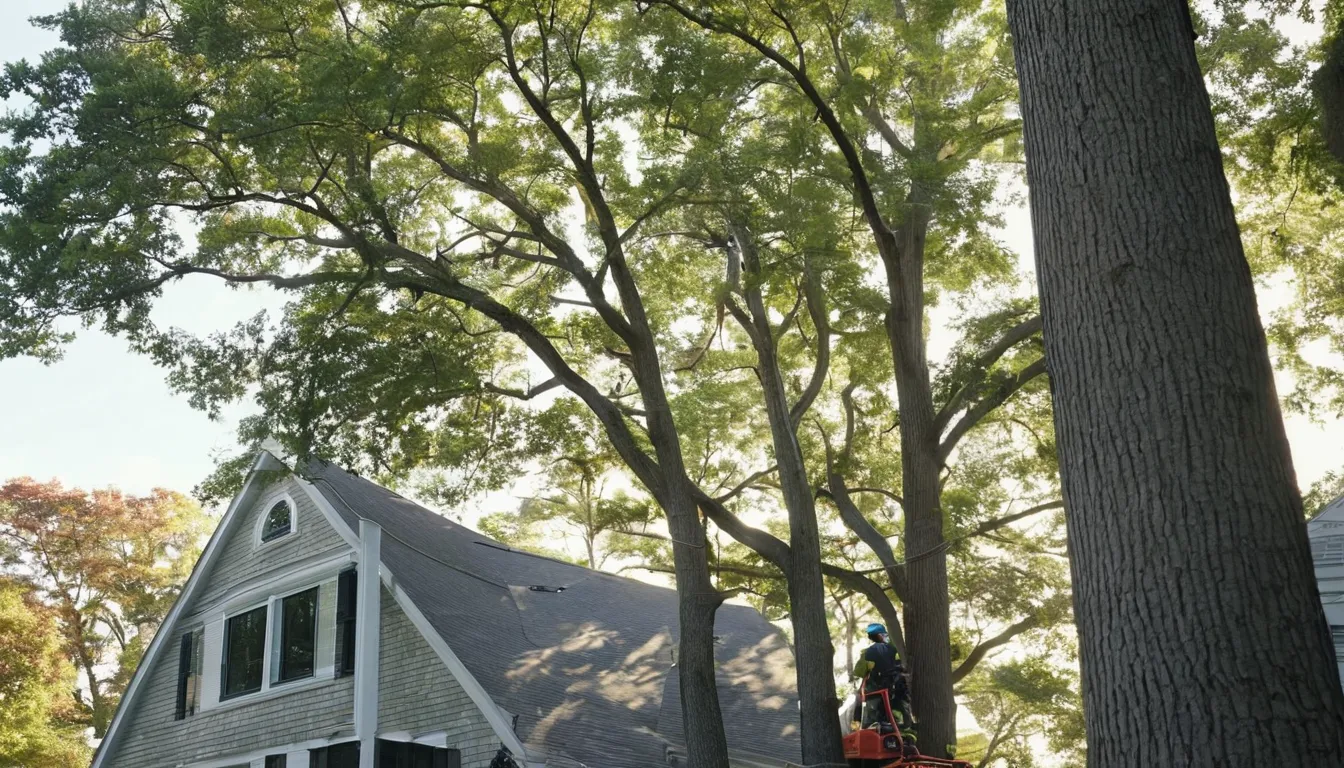
On tight lots, the tree is cut in sections from the top down. Ropes or a crane lower each piece. It is like unstacking blocks one at a time, and it takes more skill and more time.
A quote is not a random number. It reflects the work involved. Taller trees take longer. Thick trunks mean heavier pieces. A tree over a roof costs more than one in an open yard, because every cut has to be controlled. Think of moving a couch down a wide hallway versus up a narrow, twisty staircase.
Access matters too. Older neighborhoods often have close houses, fences, and little room for equipment. Snow-loaded or ice-damaged wood can also be harder to handle. Dead wood can be brittle, which changes how the provider climbs and cuts. Quote before chainsaw is a good rule to follow.
After a coastal storm, trees can be bent under pressure, like a snapped ruler held in your hands. Storm tree clearance needs extra caution, and the price can be higher. Many providers can respond quickly, but availability varies. Request a callback to check provider availability. For a tree that has already fallen on something, see our page on emergency tree removal.
Typical U.S. prices run about $150 to $500 for a small tree, $500 to $1,500 for a medium one, and $1,500 to $3,500 or more for a large tree. Hard access, storm damage, or a crane can push a job higher. These are rough ranges, not quotes.
A written quote protects both sides. It lists what is included, so there are no surprises on the day. Look for these items:
A stump is like an iceberg. What you see is the smaller part. Stump grinding chews the wood a few inches below the surface, so you can plant grass or build over it. Full stump removal digs out the roots and costs more. Leaving it costs the least up front, but it can attract pests and trip people.
Some towns require a permit for large, protected, or street-side trees. Rules may also apply near wetlands, historic areas, or shared property lines. A homeowners association may have its own say. Ask the provider what applies, and check with your town office if you are unsure.
Ask each provider to inspect the tree before giving a price. A phone guess is only a guess. Compare the written quotes line by line. A very low number may leave out cleanup or insurance. Ask how they will protect your lawn, roof, and fence.
Move cars out of the driveway and off the street if needed. Clear patio furniture, toys, and garden tools. Keep children and pets indoors. Let neighbors know, since noise and falling branches can reach their yards. If you have an older home with a stone or block foundation, point out any weak spots to the provider.
The provider should leave the site tidy. You can keep the wood for a fireplace, ask for wood chips as mulch, or have it hauled away. Wait for the ground to settle before replanting, especially after freeze-thaw cycles.
Some policies may cover sudden damage from a fallen tree. Check your policy. Providers can often help document damage for a claim, so take photos before anything moves.
Gather a few photos of the tree and note where it stands. Then ask a local provider for a written quote.
A provider looks at the trunk, limbs, roots, and surroundings before suggesting a plan or a price.
Trees are dropped whole in open yards or taken down in sections near homes and wires.
Many jobs include clearing branches and logs. Confirm this on the written quote before work starts.
Ask about stump grinding, full removal, or leaving it, since each choice changes the final price.
These are typical U.S. ranges only. Real prices change with tree size, access, condition, and local rates. Only a written quote from a provider who has seen the tree shows your actual cost.
| Item | Typical range | Notes |
|---|---|---|
| Small tree (under 30 ft) | $150 – $500 | Easy access keeps the price low |
| Medium tree (30–60 ft) | $500 – $1,500 | Depends on trunk width and location |
| Large tree (over 60 ft) | $1,500 – $3,500 | More rigging and time on site |
| Crane or hard access | $500 – $2,500 extra | Tight lots or tree over a roof |
| Stump grinding | $100 – $600 | Priced by stump size and roots |
| Storm-damaged tree | $1,000 – $5,000+ | Tension and hazards raise the work |
Share the size, location, and any damage, plus photos if you have them.
A local provider reads the tree and the space around it in person.
You get a written price that lists the work, cleanup, and stump choice.
If the quote suits you, the provider sets a date for the work.
We explain price factors in simple words so a quote feels clear instead of confusing.
Providers in our network put the plan and price on paper before work begins.
You are matched with independent providers who know local trees, weather, and older homes.
Request an estimate, compare it, and decide at your own pace.
Tell us about your tree and where it stands. We will point you to independent providers in our network who can give a written quote.
Typical U.S. prices run from about $150 for a small tree to $3,500 or more for a large one. Access, condition, and stump work change the total. A written quote after an in-person look gives you the real number.
Sometimes. Some towns protect large or street-side trees, and certain areas have extra rules. Ask the provider and check with your town office before work begins.
Not always. Many quotes price the stump separately. Stump grinding usually costs about $100 to $600. Ask the provider to list it on the written quote so you know what is covered.
Tell us about your tree and where it stands. We will point you to independent providers in our network who can give a written quote.
No obligation