Need emergency tree removal services in Media?
Tell us about your tree and where it stands. We will point you to independent providers in our network who can give a written quote.
No obligation
Request an estimate from a local provider
A tree that falls on a roof, a car, or a driveway turns a normal day upside down. You may feel rushed and unsure who to trust. This page slows things down just enough to help you think clearly, starting with safety and then moving to the work itself.
Capriesemurray Tree Service is a referral service. We do not cut or haul trees. We connect homeowners in Media and the Media area with independent local providers in our network. A provider inspects the tree, explains the options, and puts a written quote on paper. Here you will find what counts as urgent, what drives the price, and what to ask before any saw starts.
Before you think about cleanup, get everyone away from the tree. A fallen tree is like a stretched rubber band. It holds stored tension, and a trunk or limb can shift or snap without warning. Stay back at least one tree length from the trunk and from any hanging branches.
If a limb or trunk touches a wire, treat the wire as live. Keep children and pets inside, stay well back, and report the line to your utility and local emergency services. Providers cannot start until the utility has made the lines safe.
Urgent means a person, a home, or your way out is at risk. Here are the common signs:
Think of a sprained ankle versus a broken bone. A limb on open lawn or a split tree far from the house still needs care, but it is less pressing. Providers sort jobs the same way. Tell them exactly what you see, and they can judge where you fall in line.
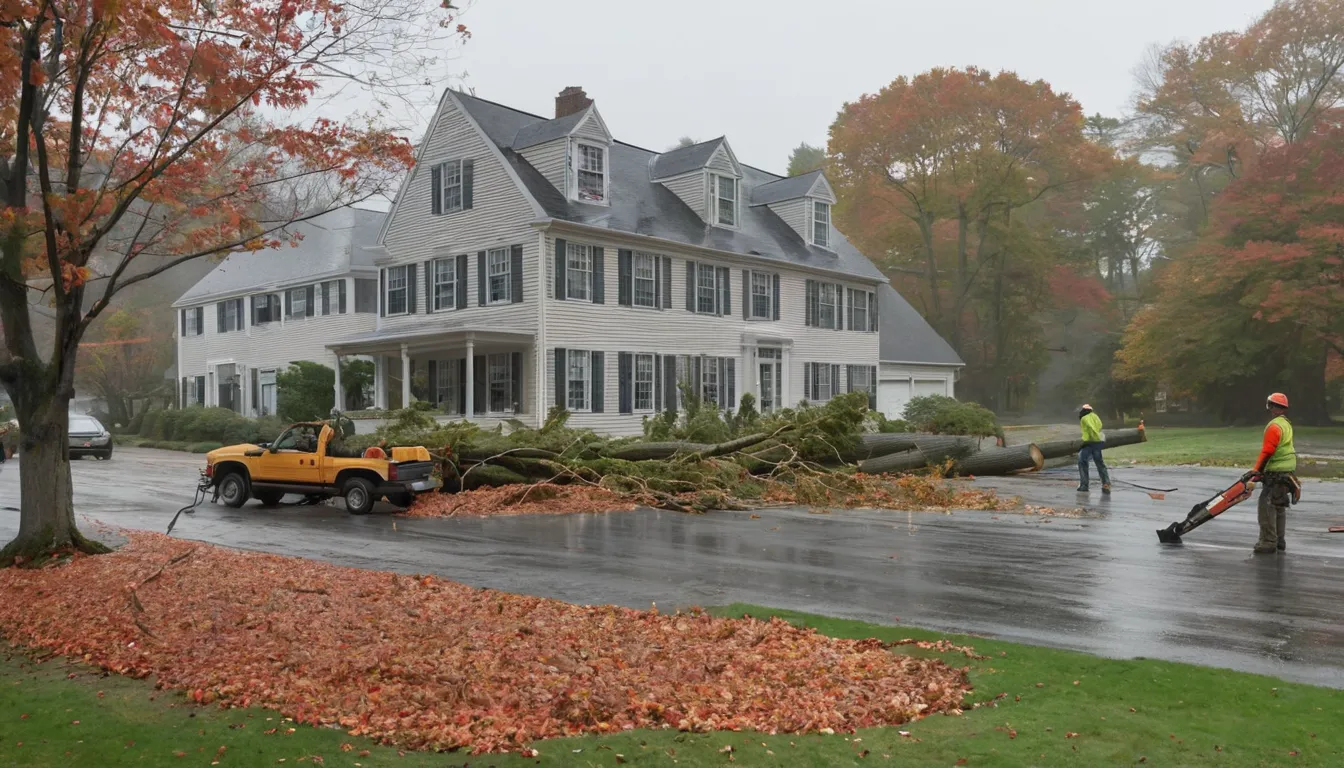
Storm tree clearance usually follows a simple path. The provider looks at the scene and reads the tree: where it is stressed, what it is touching, and where it can safely go. Then they secure the area, cut the tree in sections, and lower or move the pieces. Think of taking apart a stack of dishes from the top, never from the bottom. Hauling away the wood is often a separate line on the quote.
Rush jobs cost more for the same reason a rush order at a print shop does. Crews rearrange their day, work in rough conditions, and bring extra gear. Size, access, and what the tree is resting on all change the price. A tree lying in an open yard is simpler than one pressed against an older home with a stone foundation.
Quote before chainsaw. A written quote lists the work, the cleanup, and the total, so there are no surprises later. Be wary of anyone who asks for cash up front or refuses to put the price on paper. A good provider understands that you want clarity when things feel chaotic.
When a tree sits on a building, a tree falling service becomes a careful lift, not a quick cut. Removing the wrong piece first can drop the whole load onto the damaged roof. Providers may use ropes or a crane to take weight off in stages. This is why these jobs are priced higher and why you should never climb up there yourself.
Once the trunk is gone, a stump often remains. Stump grinding is usually a separate step, like pulling a tooth after the crown has broken. Many homeowners handle the urgent removal first and schedule stump grinding later, once the yard dries out. Ask for it as its own line item so you can decide.
Some policies may cover sudden damage from a fallen tree, but coverage varies, so check your policy. Take photos of the tree, the damage, and the surroundings before anything moves. Providers can often help document damage for a claim. Keep every written quote and receipt together.
When a large storm hits, many homes need help at once. Providers may be busy, and the work is sorted by risk. Request a callback to check provider availability, and ask what temporary steps, such as tarping or blocking off an area, you can take while you wait. Cold snaps and heavy snow can add weight and slow access.
Most storm failures start quietly. Rot, old cracks, and roots disturbed by freeze-thaw cycles all weaken a tree long before it falls. Have large trees near your house checked once a year, especially those close to stone or block foundations. Removing a weak tree on a calm day is usually simpler and cheaper than doing it after it falls.
A few plain questions can save you stress:
The provider looks over the tree, the ground, and anything it touches before planning a safe approach.
Trees are taken down in controlled pieces and lowered carefully to protect your roof, fence, and yard.
Ask whether logs, branches, and brush are carried away or left for you to use or stack.
Stump grinding can be added to the quote or scheduled later once the emergency is over.
These are typical U.S. ranges only. Real prices vary with tree size, access, and risk, so a written quote from the provider is the only number that counts.
| Job type | Typical range | Notes |
|---|---|---|
| Small tree or large limb down | $300 – $1,000 | Clear access and no structure involved |
| Medium tree down in yard | $800 – $2,500 | Price rises with size and wood volume |
| Tree blocking driveway or road | $1,000 – $3,500 | Fast clearing may need extra crew |
| Tree on roof or house | $2,000 – $10,000 | Often needs ropes or a crane |
| Crane add-on | $1,000 – $3,500 | Used when weight cannot be lowered by hand |
| Stump grinding | $150 – $600 | Per stump, depends on width and roots |
Share the tree size, where it fell, and whether it touches a house, car, or wires.
We connect you with a local provider in our network who handles this work.
The provider inspects the tree and gives you a written price and scope.
Once you agree, the provider sets the timing and starts the work.
Providers in our network put the scope and price on paper before work begins.
You are matched with independent providers who know nearby streets and weather.
We explain what drives the price so the quote makes sense.
Request an estimate, compare it, and decide at your own pace.
Tell us about your tree and where it stands. We will point you to independent providers in our network who can give a written quote.
A tree is an emergency when it threatens people, a building, or your only way out. Examples include a tree on a roof, across a driveway, or leaning with lifted roots.
Typical U.S. prices run from a few hundred dollars for a small fallen tree to several thousand when a tree rests on a house. Size, access, and equipment all matter, so always get a written quote first.
Some policies may cover sudden damage from a fallen tree, especially when it hits your home. Coverage differs, so check your policy. Take photos before cleanup, and ask the provider to help document the damage for a claim.
Tell us about your tree and where it stands. We will point you to independent providers in our network who can give a written quote.
No obligation